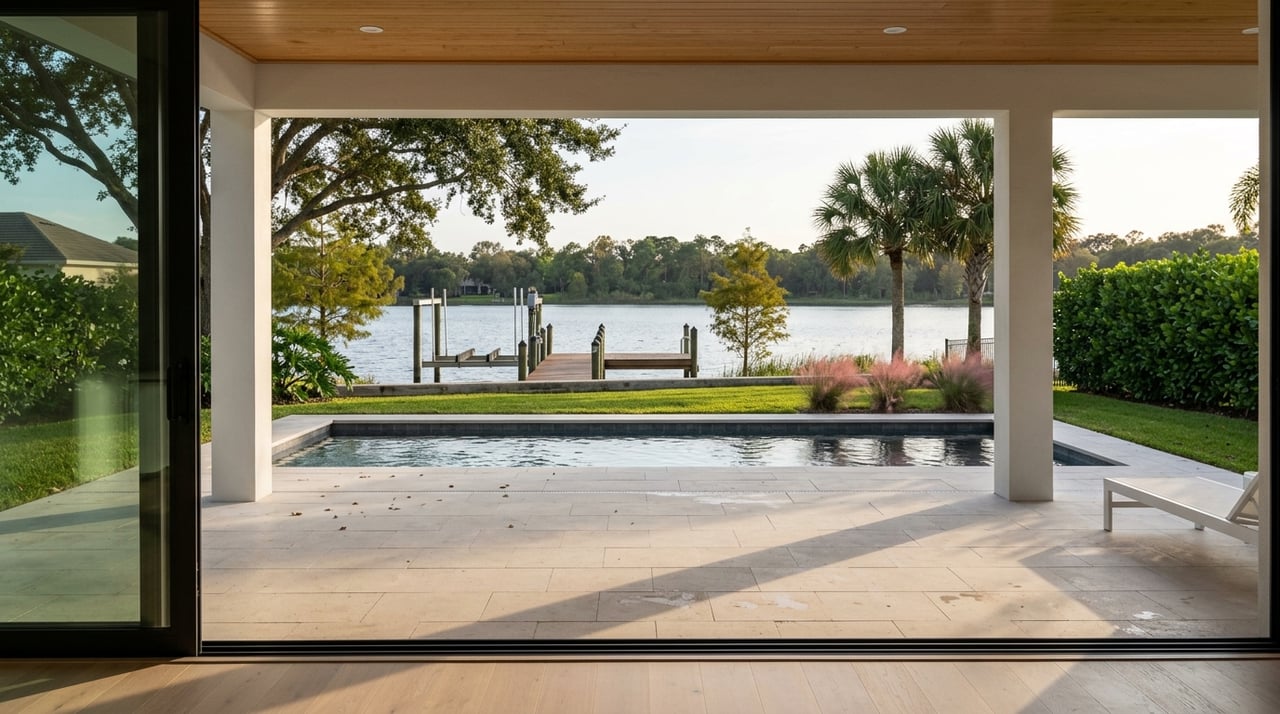
If lakefront living is on your wish list, Odessa probably feels like a natural fit. You get the pull of open water, more space than many nearby suburban areas, and a lifestyle that often feels both outdoorsy and long-term in focus. But buying on a lake here comes with details you do not want to gloss over, from access rules to flood zones to changing water levels. Let’s dive in.
Why Odessa Draws Lakefront Buyers
Odessa has a long connection to lakes and rural land use. The West Pasco Historical Society notes that Odessa began in Pasco County and now extends into northern Hillsborough County, which helps explain why the area still feels distinct even as growth has expanded around it.
That identity still shows up in how people think about buying here. According to U.S. Census QuickFacts for Odessa, the community had 8,080 residents in 2020, a 70.2% owner-occupied housing rate, a median owner-occupied home value of $497,100, and a median household income of $117,806. Those are Odessa-wide numbers, but they help frame why many lakefront purchases here are approached as long-term homes rather than quick moves.
What Lake Access Really Means
One of the biggest mistakes buyers make is assuming every lakefront home comes with the same kind of access. In Odessa, that is not a safe assumption.
Water-resource data frequently identifies Odessa-area lakes as private, unincorporated lakes. For example, Keystone Lake is listed at 434 acres, while other nearby lakes such as Calm Lake, Pretty Lake, and Lake Armistead are also tracked individually through Water Atlas records. That matters because private-lake classification can affect how you use the water and whether access is public, shared, deeded, or controlled by an HOA.
Pasco County’s Greenways, Trails, and Blueways Master Plan says the county has 16 public blueway launch points for non-motorized vessels. In practical terms, that means you should not assume your target lake has a public ramp or open public launch options just because it is visible on a map.
Questions to ask about access
Before you fall in love with a view, ask:
- Is the lake private, shared, or publicly accessible?
- Are there rules for motorized boats, paddlecraft, lifts, or docks?
- Is shoreline use limited by deed restrictions or HOA rules?
- Does the property include direct frontage, an easement, or community access only?
These questions can shape both your day-to-day lifestyle and your resale options later.
Expect Lake Levels to Change
Lakefront living is not static. Water levels, shoreline appearance, and dock usability can all change over time.
The Lake Calm narrative explains that the lake is largely rainfall-dependent and can retreat substantially during dry periods. The same source also notes a mix of older cottages and newer high-value homes around the lake, which shows how lifestyle appeal can remain strong even when the lake itself changes seasonally.
That same document, along with local water-resource records, is a useful reminder that your shoreline view in one season may not look exactly the same in another. If swimming, boating depth, or dock use is a top priority for you, it is worth asking not just how the lake looks today, but how it performs in wet and dry periods.
Why management history matters
The broader lake story matters too. The Lake Calm and Lake Armistead materials describe issues such as water-level management, flooding, algae concerns, runoff, and development pressure nearby. Those factors can affect how a lake feels to live on, not just how it photographs.
The good news is that conditions are actively monitored. Water Atlas pages for lakes like Keystone Lake show long-running water-quality and hydrologic sampling, with recent samples in 2025 or 2026, which means conditions are being tracked over time rather than guessed at.
Flood Zones Matter More Than Many Buyers Expect
A common misconception is that if a property is inland, flood risk is minimal. In Pasco County, that is not always true.
Pasco County’s emergency management plan states that the county participates in the National Flood Insurance Program and that many areas are in special hazard flood zones. If you are buying a lakefront home, you should verify the address in the county’s Evac Finder and cross-check flood-hazard information through FEMA’s official Flood Map Service Center.
Flood-zone status can affect more than insurance. It can also affect future remodeling plans, permitting requirements, and how you prepare for major weather events. This is one of those details that deserves attention early, before you get emotionally attached to a property.
Waterfront Homes Often Need Extra Due Diligence
Lakefront property can bring extra review when you build, renovate, or expand. That does not mean it is a bad idea. It just means the process can be more involved.
Pasco County’s residential new-home permit checklist specifically flags waterfront issues such as flood affidavits for properties in flood zones, drainage plans, and setbacks tied to wetlands, flood-zone lines, or the mean high water line when applicable. If you are buying with plans to add onto the home, rework the shoreline, or pursue a dock-related improvement, those requirements should be part of your decision-making from the start.
Older homes and rebuild potential
Odessa lake neighborhoods often include a mix of housing styles. Research tied to local lake narratives points to renovated cottages, mid-century homes, tear-down opportunities, and newer custom construction depending on the lake and street.
That mix can be a real advantage if you want options. You may find a move-in-ready home, a property with renovation upside, or a lot that appeals to buyers thinking long term. The key is matching the property to your actual goals and understanding what county review may require if you want to make changes later.
Odessa’s Appeal Goes Beyond the Water
Part of Odessa’s draw is that the lifestyle is not just about owning shoreline. It is also about breathing room, outdoor access, and a semi-rural feel that still connects you to the broader Tampa Bay area.
The historical record and lake narratives both point to Odessa’s long-standing rural identity. You can still see that blend today in places like the Starkey Ranch Theatre Library Cultural Center, a public community facility that opened in 2021 and adds another layer of everyday convenience and community life.
If you like the idea of balancing lake time with trails and open space, Odessa stands out here too. Pasco County’s trail plan highlights the Starkey Wilderness Trail, a 7.3-mile paved trail inside Jay B. Starkey Wilderness Park and part of the Florida Coast-to-Coast Trail system.
What to Confirm Before You Tour
If you are serious about buying lakefront in Odessa, go into each showing with a sharper checklist than you would use for a typical home search.
Start with these core questions
- What kind of lake access comes with the property?
- Are there restrictions on boats, docks, lifts, or shoreline improvements?
- Is the property in a flood zone or evacuation zone?
- How has the shoreline behaved in dry seasons or after heavy rain?
- Has the lake had known algae, runoff, or water-level management issues?
- If you plan to renovate, what extra documentation might the county require?
These are not small details. They are the details that shape how the property lives, what it may cost to own, and how smoothly your purchase can move.
A Smarter Way to Approach Odessa Lakefront Buying
The right lakefront home is not just the prettiest one online. It is the one that fits how you want to live, what level of risk you are comfortable with, and how much flexibility you want for future updates.
That is where local guidance matters. In a market like Odessa, a calm, organized approach helps you sort through access, permitting, flood considerations, and the real differences between one lake and the next. If you want help evaluating lakefront opportunities with clarity and local perspective, connect with Julia Wright for a consultation.
FAQs
What should you ask before buying a lakefront home in Odessa?
- Ask whether the lake is private or public, what access rights come with the property, whether there are rules for boats or docks, and whether the parcel sits in a flood or evacuation zone.
Do all Odessa lakefront homes have the same water access?
- No. Local lake data and county blueway planning show that access can vary widely, and some lakes are commonly classified as private, which means buyers should verify access details early.
Can lake levels change on Odessa-area lakes?
- Yes. Local lake narratives show that some lakes are rainfall-dependent and can recede during dry periods, which can affect views, swim depth, and dock usability.
Do waterfront properties in Pasco County have extra permit requirements?
- Yes. County permit guidance notes that waterfront properties may need added documentation related to flood zones, drainage, wetlands, and setbacks tied to water or flood features.
Is flood risk still a concern for inland lakefront homes in Odessa?
- Yes. Pasco County notes that many areas are in special hazard flood zones, so buyers should verify both evacuation status and flood-hazard mapping for any address they are considering.